
Pearson airport delays in snow come from de-icing queues, reduced runway capacity and aircraft arriving late from elsewhere. From Hamilton, the drive to Pearson (about 70 km, normally 45-65 minutes) can stretch past 90 minutes in a storm. Check your flight before leaving, add 30-45 minutes to the pickup time, and book a car that tracks your flight and re-times itself if the airline delays or cancels.
Winter is when our Hamilton to Pearson limo service works hardest, and when travellers make most of their avoidable mistakes. This is the playbook our dispatch desk follows from the moment a storm appears in the forecast, written so you can follow it too, whoever drives you.
Why do Pearson airport delays pile up in snow?
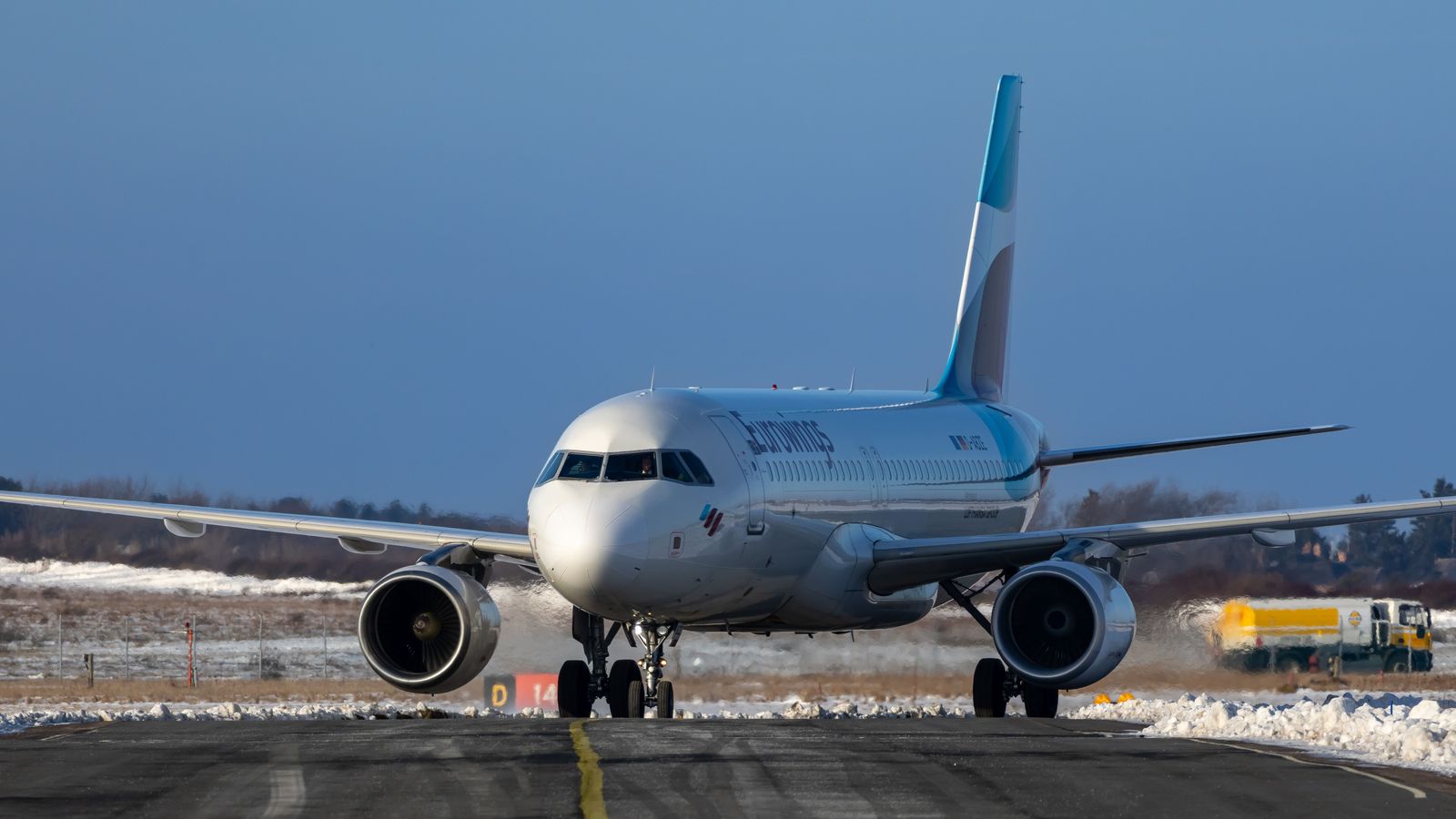
Snow slows an airport in layers. Aircraft must be de-iced before take-off, which adds time on the ground and creates a queue when many flights depart together. Snow clearing and lower visibility reduce how many aircraft can land and take off each hour. And because airlines fly the same aircraft several times a day, a storm in Chicago or Montreal delays the plane that is supposed to take you from Toronto. The result is that a flight showing "on time" at 5 a.m. can be two hours late by noon without a flake falling on Pearson itself.
None of that is within our control or yours. What you can control is the ground trip: leaving at the right time, not being stranded at the curb, and having a way home if the flight never leaves.
Two days out: watch the forecast, not the sky
Snow events around the western end of Lake Ontario are usually forecast well ahead. When Environment Canada posts a winter storm or snowfall warning for Hamilton, Halton or Peel, three things happen at our desk: dispatch reviews every Pearson pickup in the window, moves early-morning departures earlier, and messages customers the evening before with a revised time. You can do the same by checking two things: the weather forecast along the whole route, and your airline's travel advisories, which often allow free changes before a big storm.
If your airline offers a free change to an earlier flight ahead of a storm, take it seriously. Leaving the night before and staying near the airport is often the single best move; our Pearson airport hotels page and the post on staying near Pearson the night before a flight cover it.
How much earlier should you leave Hamilton in snow?
| Conditions | Downtown Hamilton to Pearson (about 70 km) | Suggested extra time on the pickup | Business sedan fare (planning range) |
|---|---|---|---|
| Clear, off-peak | 45-55 min | none | $245-300 all-in + HST |
| Weekday rush, dry | 60-70 min | none beyond rush planning | $245-300 all-in + HST |
| Light snow, roads wet | 60-75 min | +20-30 min | $245-300 all-in + HST |
| Snowfall warning, active storm | 75-110 min | +45-60 min | $245-300 all-in + HST |
| Lake-effect squall at the Skyway | stop-and-go, unpredictable | +45 min and route via the 407 | $245-300 all-in + HST |
The fare does not change with the weather: the fixed all-in figure you confirmed stands, whether the drive takes 50 minutes or 100. SUVs, which many winter travellers prefer, are about $320-390 for a business SUV (Tahoe or Yukon class, five passengers) and $405-495 for an executive SUV on the same basis.
Which roads suffer first between Hamilton and Pearson?
- The escarpment accesses. The Jolley Cut, Claremont, Sherman and Kenilworth accesses slow or close first. A Mountain pickup after overnight snow may go out via the Linc and the Red Hill Valley Parkway, or down Highway 6, rather than straight down the brow.
- The QEW at the Burlington Skyway. The bridge is exposed and catches lake-effect squalls; visibility can drop suddenly.
- The 403 and QEW into Mississauga. Collisions in snow cause lane closures that ripple for kilometres.
- The 427 and airport approaches. Heavy airport traffic plus snow makes the last few kilometres the slowest.
The tolled 407 ETR is often steadier in poor weather simply because it carries less traffic; since our fares are all-in, the chauffeur can use it without asking. Live closures and plow status are on Ontario 511.
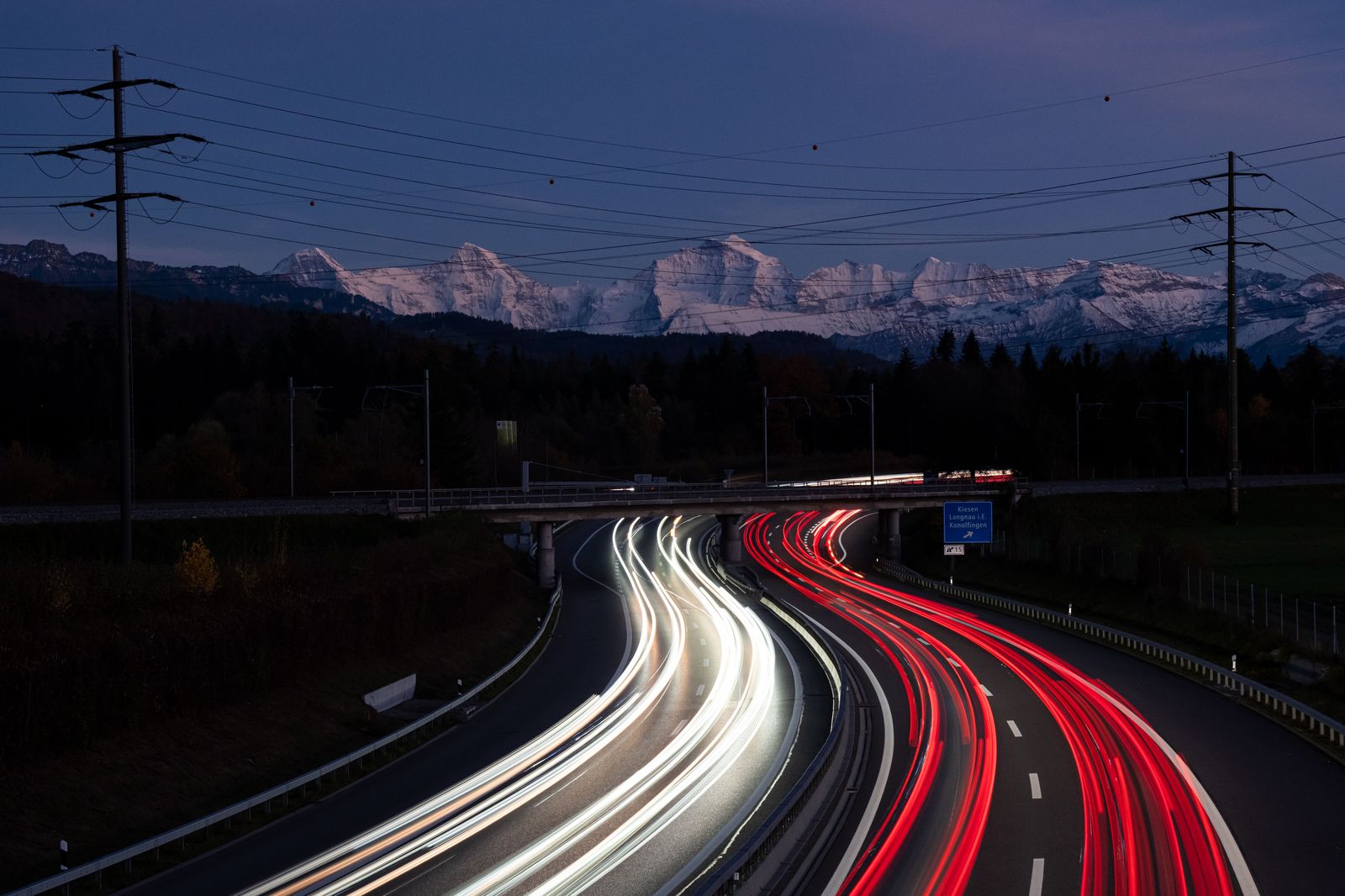
The morning of a snowy departure: a checklist
- Check your flight status on the airline's app or Toronto Pearson's website before the car arrives. If it is cancelled, call us before the pickup, not after.
- Check in online and, if possible, choose bag drop rather than full check-in to save time at the terminal.
- Clear your own path. A driveway the chauffeur cannot reach costs minutes; we will walk to the door, but the car needs somewhere safe to stop.
- Dress for the curb, not the cabin. You may wait outside at the departures door; boots and a warm layer matter.
- Keep medication and chargers in your carry-on, in case you spend hours at the gate.
- Tell the chauffeur your terminal (Terminal 1 or Terminal 3) so the drop is at the right door first time.
What if the flight is delayed after you have been dropped off?
Then the ground trip is complete and the rest is between you and the airline. Stay airside if the delay is only a few hours; leave the airport only if it is cancelled or pushed to the next day. If you do need to go home, message dispatch: we will send a car back as a new booking at the same planning fare, and in a storm it is worth booking immediately because demand rises quickly when many flights cancel together.
What if your flight is cancelled before you leave home?
Tell us as soon as the airline tells you. A departure cancelled by the airline is re-timed to your rebooked flight at no charge while we can still cover it, rather than treated as a no-show. If you decide not to travel at all, the normal cancellation rule applies from the scheduled pickup: more than 72 hours, no charge; 72 hours or less, 10 %; 48 hours or less, 50 %; 24 hours or less or a no-show, 100 %. In practice, the airline usually cancels early enough for a free re-time.
Arriving at Pearson in a storm: how the pickup works
This is where flight tracking earns its keep. Your chauffeur follows the flight from departure, so a two-hour delay in Calgary moves the car's timing by two hours at no cost. Included waiting starts only when you actually land: 30 minutes on Canadian domestic and US flights, 60 minutes on other international arrivals, then 15-minute blocks. In storms, aircraft sometimes wait on the taxiway for a free gate, and baggage delivery slows; dispatch watches the arrival and messages you before any extra time starts. For what the drive home looks like after dark, see late-night arrival from Pearson to Hamilton.
Diversions: when you land somewhere else
Occasionally a flight bound for Pearson diverts to another airport. If it lands at Hamilton airport (YHM), message dispatch: we can redirect the car, and the fare changes to the shorter run. If it lands farther away and the airline buses or rebooks passengers to Pearson, we re-time the pickup to your new arrival. The key is a message as soon as you know; the tracking system shows the diversion, but only you know what the airline has told passengers.

Your rights when a flight is delayed or cancelled by weather
Canada's Air Passenger Protection Regulations, administered by the Canadian Transportation Agency, set out what airlines owe passengers. Weather is treated as outside the airline's control, so the rules focus on rebooking or a refund and on keeping you informed, rather than on compensation. The detail depends on the airline's size and the length of the delay; read the Agency's guidance and your airline's tariff before arguing at the desk. Keep receipts for anything you pay yourself.
Should you fly from Hamilton instead in winter?
It is a fair question. YHM is 15 km and 20-25 minutes from downtown Hamilton, a $90-115 sedan fare, and has far less traffic around it. It is not immune to snow, but the ground leg is short enough that a storm costs you minutes, not an hour. If a Hamilton routing exists for your trip, winter is the season it is most worth checking. Our post on flying into Hamilton or Toronto weighs the two.
Families and older travellers in winter
A family of five with car seats and ski bags is exactly the booking that goes wrong in a snowstorm with a street taxi. Book an executive SUV with winter tires, add child seats at booking ($10-15 each, planning figure), and give dispatch the terminal. For an older parent flying alone, add meet and greet on the return ($25-35) so the chauffeur is inside arrivals rather than asking them to walk to a snowy curb.
The hourly option on a disrupted day
When a storm scrambles a business trip, a one-way transfer can be the wrong product. A traveller whose afternoon flight is cancelled may need to get to a hotel, a client meeting and back to Pearson for an evening departure. An hourly chauffeur keeps one car with you through the uncertainty: a business sedan at $120-145 per hour, 3-hour minimum, all-in plus HST, extra time in 30-minute blocks. The chauffeur waits while you rebook at the counter.
What our chauffeurs do differently in winter
Behind the scenes, a snowy Pearson run looks different from a summer one. The car is warmed and cleared before it leaves the yard, so you are not waiting while windows defrost. Chauffeurs carry a brush, a shovel, washer fluid, a blanket and water, because a closure on the 403 can hold traffic for an hour. They watch following distances on the QEW rather than the clock, and dispatch, not the chauffeur, carries the pressure of timing: if a pickup needs to move 30 minutes earlier, the desk calls you the evening before so nobody is rushing on an icy road. On the Mountain, chauffeurs check which escarpment access has been plowed before choosing the way down, and in the lower city they avoid the steep side streets that ice first.
Booking a winter Pearson run direct
Book on HamiltonLimo.net's own reservation engine with your flight number and terminal; the fixed all-in fare is shown before you confirm. All cars run winter tires in season, chauffeurs check forecasts before every early run, and dispatch will call you to move a pickup earlier when a storm is forecast. For every airport we serve, see the airport limo page.